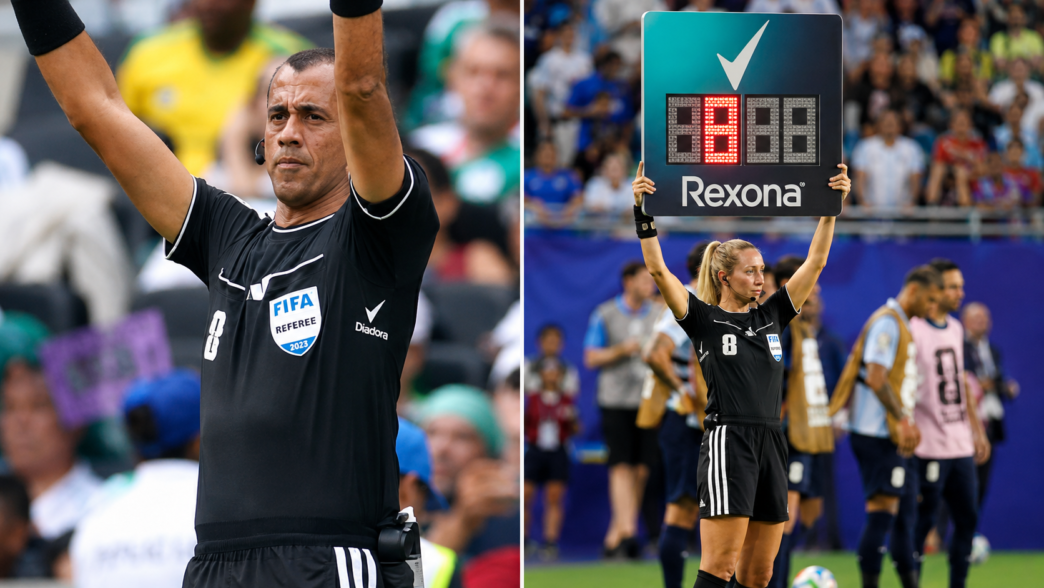
Nobody was looking at the fourth official's armpit. That was exactly the point. Rexona placed its logo directly under the armpits of fourth officials across all 104 matches at the 2026 FIFA World Cup, as Official Personal Care Sponsor through Unilever. During normal play, the branding is completely invisible. The kit looks standard. There is nothing to see.
Then a substitution happens. The board goes up. Both arms raise. The Rexona logo sits exactly where a deodorant logo should be, visible to every camera angle pointed at the touchline.That is the whole idea, and it is one of the smartest sponsorship placements of the tournament.
Why This Works
Ben Curtis, Global Brand Vice President for Rexona at Unilever, described fourth officials as people who "may not always be the focus of attention but are at the centre of some of football's most intense and anticipated moments." He added: "They need to remain cool and calm under pressure. That is exactly why this partnership is such a natural fit for Rexona.
"That alignment between product truth and sponsorship context is the reason this placement works. A deodorant brand appearing at the exact moment when pressure peaks, arms go up, and the stadium holds its breath is not clever for the sake of being clever. It is relevant. The product and the moment are the same thing.
Rexona also appears on the electronic substitution boards used by fourth officials, and the boards adapt dynamically so fans see Rexona, Sure, or Degree depending on the teams competing and the market broadcasting the match.
That localisation detail matters. A global sponsorship that adjusts to the viewer's market is not just smart distribution. It is proof that the team behind the campaign thought the entire execution through, from the armpit to the broadcast feed.
The Bigger Sponsorship Context
The 2026 FIFA World Cup is estimated to reach 5.8 billion viewers globally, giving FIFA's partnering brands including Coca-Cola, Unilever, Diageo, Visa, and McDonald's an unparalleled commercial stage. In that environment, standing out is not a given even for official sponsors. Brands that pay for official partnership rights still have to earn attention. The logo on a LED board or a stadium banner blends into the background. The moment it becomes interesting is when the placement feels like it belongs.
Rexona found that moment by going somewhere none of the other sponsors thought to look. While similar concepts had been executed before, most notably by Avanço deodorant in Brazil with Corinthians, Rexona's execution at a World Cup brings the concept to a massive global audience for the first time.
The substitution board is where fans find out how much time is left, and where tension either builds or releases. The fourth official is the person standing between the two benches when managers are losing their composure.
That is not a quiet corner of a football match. It is one of its most charged locations, and Rexona is now permanently associated with it across 104 games and billions of broadcast moments.
What Other Brands Can Learn From This
Most World Cup sponsorship activations chase the same real estate: the LED boards around the pitch, the broadcast graphics, the halftime ad slots. All of those placements are visible, but they are also crowded. When every brand is competing for the same eyeballs at the same moment, the value of each individual placement drops.
In an era where audiences are increasingly resistant to traditional advertising, the campaign's success lies in its simplicity. It is relevant, memorable, and perfectly aligned with the product being promoted.
Rexona did not find more space. It found the right space, which is a different problem entirely. The brief that produced this placement was not "how do we get more visibility?" It was "where does our product actually belong in this experience?" That question is worth asking before the next sponsorship brief is written.
The armpit is not glamorous real estate. But it earned Rexona more attention, more social media discussion, and more earned media than most brands with far bigger budgets managed to generate across the entire tournament. That is the lesson.