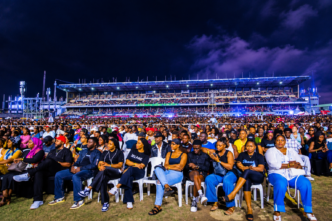


Munch It’s latest Big Brother Naija activation offers a useful lesson for brands investing in entertainment sponsorships. The snack brand recently took over the BBNaija Arena for the season’s 10th sponsored task, with Team Loveable Snack emerging as the winner.
On the surface, it was another branded task inside one of Nigeria’s biggest entertainment shows, but there was more happening than product visibility. Munch It used competition, entertainment and participation to put its brand inside the experience viewers were already watching.
That is becoming more important as brands fight for attention across television, social media and digital platforms. Audiences are surrounded by advertising every day, and simply appearing in front of people does not always mean they will remember a brand.
A logo can be seen and forgotten within seconds, while an experience can give people something to talk about after the advertisement is gone.
For brands investing in entertainment properties, the bigger question is therefore not just how many people will see them, but what those people will remember.
A Sponsorship Is More Than a Logo
Entertainment sponsorship has always been attractive to marketers because it can put a brand in front of a large and highly engaged audience.
A programme like Big Brother Naija gives brands access to viewers who are already spending hours watching, discussing and sharing content around the show.
That creates an opportunity that a normal advertising slot cannot always provide because the brand is entering a conversation that already exists. But the value of that opportunity depends on what the brand does with it.
Munch It’s latest task shows one way of using that opportunity. Instead of simply placing its name around the BBNaija Arena, the brand became part of the activity taking place inside it.
Housemates competed in different challenges involving teamwork, knowledge, speed and physical ability, while the teams were given snack-related names. Team Loveable Snack eventually won the task, giving the brand a natural place inside the story of the competition.
This matters because the audience is not only watching a brand message. They are watching something happen. There is competition, there are winners and losers, there are reactions from the housemates and there is a result that viewers can discuss.
The brand becomes connected to the entertainment rather than sitting outside it. That is a stronger position for a marketer because people have a reason to pay attention.
Munch It’s positioning also fits the environment. Snacks are already connected to entertainment and social moments. People eat snacks while watching television, playing games, watching films, listening to music or spending time with friends. Putting a snack brand inside an entertainment property therefore does not require the audience to make a difficult connection between the product and the moment.
The marketing idea already fits behaviour that people understand.This is where brands need to be more deliberate about sponsorships. The first question should not always be, “How much reach will this give us?” Reach matters, but it is only one part of the picture.
A better question is, “What can our brand make possible within this experience that would not happen without us?” That question can produce very different ideas.
A financial brand might create a challenge around money decisions, while a telecom company could build an experience around connection and communication. A beauty brand could create a transformation challenge, while a food or beverage company could own a moment around sharing, taste or entertainment.
The idea does not have to look the same across categories because the strongest activations are connected to what the brand naturally does.
Munch It’s task also shows the value of giving audiences a simple story to follow. Team names, challenges and a final winner made the activation easy to understand.
Viewers did not need a long explanation about what the brand wanted them to feel. They could watch the task, follow the teams and see who won.
The Next Step Is Turning Attention Into Brand Memory
Getting people to watch an activation is only the beginning. The bigger challenge is making sure they remember the brand after the entertainment ends. This is where many sponsorships can struggle because the event may be memorable while the brand behind it becomes secondary.
Brands need to build a clear connection between the activity and the product. Munch It has an advantage here because its snack range already fits moments of fun and casual entertainment. The team names and playful nature of the task helped keep that connection visible without turning the entire activity into a traditional product advertisement.
The same principle can be applied to other sponsorships. If a brand sponsors a music festival, what part of the festival experience can it own? If a financial company sponsors a reality show, what part of the audience’s behaviour can it help with? If a beauty company sponsors an awards show, what can it give audiences that makes the brand part of the preparation and celebration?These questions move marketers away from buying space and towards designing experiences.
There is also a strong social media opportunity. Big Brother Naija does not exist only on television. Its moments travel across X, Instagram, TikTok, YouTube and WhatsApp, where audiences discuss housemates, tasks and unexpected moments. That means a good activation can continue generating content after the original task has ended.
For brands, this creates a chance to build a campaign around the sponsorship rather than treating the sponsorship as the campaign itself.
The television moment can become short-form video, reactions can become social content and creators can discuss the activation. Consumers can also participate in related activities, allowing the brand to keep the conversation going instead of allowing the sponsorship to disappear when the programme ends.
This also changes how marketers should measure success. Impressions and reach remain useful, but they should not be the only numbers on the report. Brands should also look at engagement, mentions, participation, content shares, audience sentiment and whether consumers can remember the brand connection.
A campaign that reaches five million people but gives them no reason to remember the brand may have a different value from one that reaches fewer people but creates a strong association. The right measurement depends on the campaign objective, but the principle remains the same: attention is useful when it can lead to memory, action or a stronger relationship with the brand.
There is another lesson here for brands working with entertainment platforms. They do not always need to create something completely new. Sometimes the strongest activation comes from understanding the behaviour that already exists within the platform and finding a natural role for the brand.
Munch It did not need to change what BBNaija is. It used competition, teamwork and entertainment, which already fit the programme. The brand simply found a way to place its own proposition inside that environment.
That is often a better approach than forcing a campaign idea into a space where it does not belong.
Consumers can usually tell when a brand is trying too hard. An activation may have an impressive budget and a large audience, but if the connection between the brand and the experience feels forced, the campaign can become easy to ignore. When the connection feels natural, the audience is more likely to accept the brand as part of the moment.
Munch It’s BBNaija activation is therefore useful not because every brand should copy it, but because it shows what entertainment sponsorship can become. A sponsorship can be a media buy, but it can also be a creative platform. It can give a brand the opportunity to create something people watch, participate in and remember.
For marketers, that distinction matters. The entertainment industry is becoming more crowded, and audiences have more ways to avoid traditional advertising. Brands will continue to spend money on major shows, events, sports and cultural platforms, but the strongest opportunities will come from what they do with that access.
The question is no longer simply whether a brand can get into the room. It is what the brand can make happen once it gets there.