

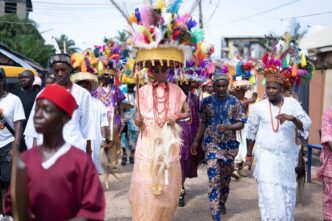
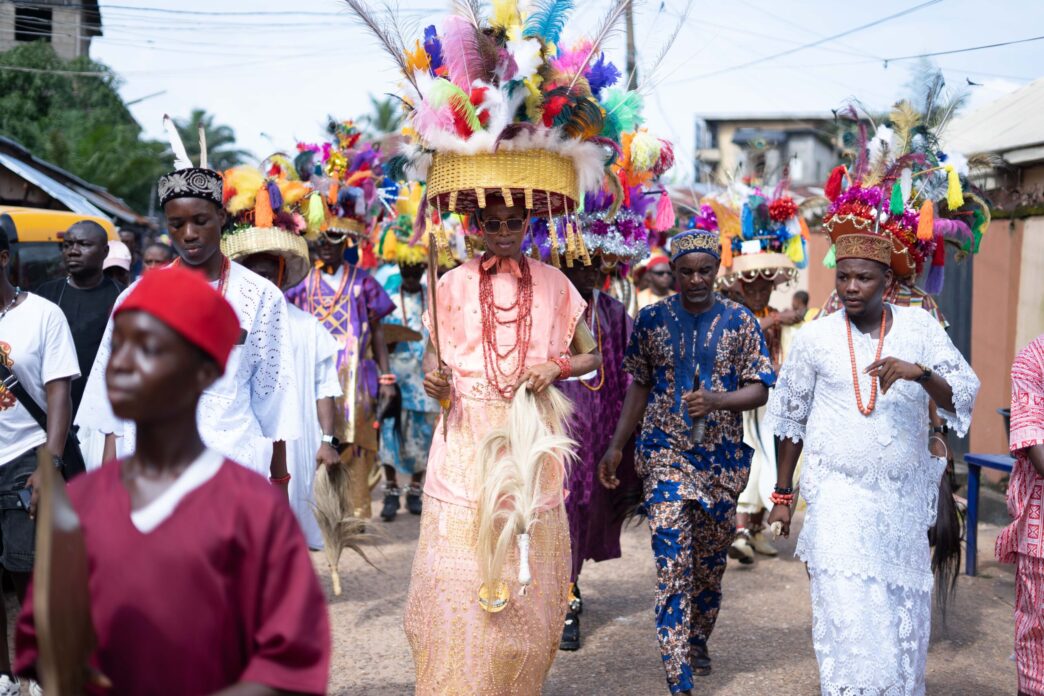
Globacom has concluded its sponsorship of this year’s Ofala Festival in Onitsha, Anambra State, with a Youth Carnival organised by the Onitsha Ado Youth Council (OYC). Cultural groups processed through Inland Town in traditional regalia, celebrating the heritage of Onitsha and the Obi of Onitsha, Igwe Alfred Nnaemeka Achebe.
Ending the sponsorship with a youth-led celebration was a smart choice. Culture can give a brand a meaningful place in people’s lives, particularly when local communities remain at the centre of the experience. But sponsorship is only the beginning.
To build lasting brand value, companies must turn their presence at cultural events into stories people remember, relationships they value and results they can demonstrate.
Why the Youth Carnival Was a Smart Move
The Youth Carnival brought together cultural groups including Otu Odu Onitsha, Egwu Odu and Agbalanze for a procession through Inland Town.
Participants wore traditional clothing and costumes representing prominent traditional rulers, including the Obi of Onitsha, the Oba of Benin and the Ooni of Ife.After the procession, the groups gathered at the old Ime Obi on St Stephen Anglican Church Road for fashion parades and competitions.
For Glo, the event offered more than a visible sponsorship opportunity. It created a platform for young people to participate in a cultural tradition, showcase their creativity and express pride in their heritage.
That matters for a brand seeking relevance among younger audiences. Young consumers do not connect with brands simply because those brands appear at events. They respond to experiences that give them something to participate in, share or remember.
A youth carnival provides several opportunities to create that connection. Traditional costumes, dance, music and fashion offer compelling visual material for social media, while competitions and performances give participants reasons to engage beyond simply attending.
The event also has the potential to extend the sponsorship beyond Onitsha. Videos and photographs can introduce the festival to audiences who were not physically present, giving the brand a way to sustain attention after the celebrations end.
However, this value depends on what happens after the event. Without deliberate content distribution and continued engagement, even a memorable carnival can disappear from public attention within days.
Culture Works Best When Communities Lead
One of the most important aspects of the carnival was the Onitsha Ado Youth Council’s role in organising it, with Glo providing sponsorship.
That distinction matters. Cultural festivals are not marketing properties waiting for brands to take ownership. They belong to the communities, institutions and traditions that have sustained them over generations.
When local organisers lead, brands have an opportunity to contribute resources and visibility without displacing the people responsible for preserving the culture. The result can feel like genuine support rather than an advertising exercise.
This is particularly important at Ofala, where tradition, community identity and respect for the Obi of Onitsha are central to the celebration. A sponsor must recognise that the festival has meaning independent of its commercial involvement.
For brands, the strategic advantage is trust. Sponsorship can create positive associations when people believe a company respects the event and contributes to its success. That association becomes weaker when commercial messaging overwhelms the cultural experience.
The principle is straightforward: the brand should help the event succeed on its own terms. Its visibility should reinforce the experience, not compete with it.
There is also a responsibility to handle cultural representation carefully. Costumes depicting traditional rulers require sensitivity to local customs and the guidance of appropriate cultural authorities.
Brands should secure permission before reusing participants’ images in unrelated advertising and ensure that their content does not misrepresent the traditions being celebrated.
Respect is not separate from sponsorship strategy. It is part of what makes the relationship sustainable.
The Missing Link Is Evidence of Impact
The available account of Glo’s Ofala sponsorship describes the carnival and its cultural significance, but it does not provide enough information to assess the commercial or community impact of the activation.
How many young people participated? How many people attended? What support did Glo provide to the organisers and participants? How widely was the event’s content distributed? Did the sponsorship create opportunities for direct engagement with the brand? These questions matter because attendance, visibility and business impact are different measures of success.
A large crowd may demonstrate public interest in the festival without establishing how much value the sponsor received. A widely shared video may generate attention without showing whether that attention improved brand consideration or strengthened relationships with the community.
Glo does not need to turn a cultural celebration into a sales presentation. It does, however, need a clear framework for understanding what its sponsorship achieved.
That framework could track participation, attendance, content reach, video completion, engagement, audience sentiment and feedback from the Youth Council.
If the activation included relevant brand interactions, those could be measured separately. The organisers could also document the support provided to participating groups and the benefits they received.
The company could then publish a concise post-event report that highlights the outcomes without reducing the festival to a collection of marketing statistics.
This would give Glo a stronger basis for evaluating the sponsorship, improving future activations and demonstrating the value of its investment to stakeholders.
Without such evidence, the event may be remembered as a colourful celebration, but its contribution to brand building remains difficult to assess.
From One Festival to a Lasting Cultural Platform
Glo’s Ofala activation reflects a wider marketing approach in which brands seek to connect with audiences through experiences, shared interests and community participation.
Other Nigerian brands have pursued similar strategies through food festivals, youth-focused events and multi-city activations. Golden Penny’s food festival, Indomie’s Palooza and Peak Milk’s Breakfast Café illustrate different ways brands can create occasions for consumers to gather and interact with them.
The lesson is not that every brand should sponsor a festival. It is that experiences can create opportunities for engagement that conventional advertising may struggle to replicate.
Their effectiveness depends on whether the activity fits the brand, matters to the audience and delivers value beyond logo placement.
Consistency is another important factor. A brand that returns to a cultural event and builds a respectful relationship with its organisers has the opportunity to develop stronger associations over time.
Repeated participation can create familiarity, but only if the brand continues to contribute meaningfully rather than treating each edition as an isolated publicity exercise.
For Glo, the next steps are practical. It should publish short videos featuring the young participants and cultural groups, give visibility to competition winners, document the outcomes of its support and begin discussions with the Youth Council ahead of the next festival.
It can also explore other cultural events, provided each partnership begins with listening to local organisers and understanding what the community needs.
A model that works in Onitsha should not simply be copied elsewhere without regard for the traditions and expectations of another community.
The opportunity is to build a repeatable approach to cultural sponsorship: identify the right partnership, support the people who make the event meaningful, create content that extends its reach, measure the outcomes and use those findings to improve the next activation.
Glo has made a promising choice by supporting a youth-led celebration within one of Nigeria’s important cultural festivals. But the real test of the sponsorship will come after the costumes have been packed away and the crowds have dispersed.
If the company can demonstrate what the carnival delivered, continue supporting the community and return with a stronger contribution, Ofala can become more than an annual sponsorship opportunity.
It can become a lasting relationship between a brand and the people whose culture gives the partnership its meaning.