
Steve Babaeko has built a reputation in Nigerian advertising as a veteran industry leader, founder and Chief Executive Officer of X3M Ideas, and President of the International Advertising Association (IAA), Nigeria Chapter. Now, he is taking a different kind of story to the screen.
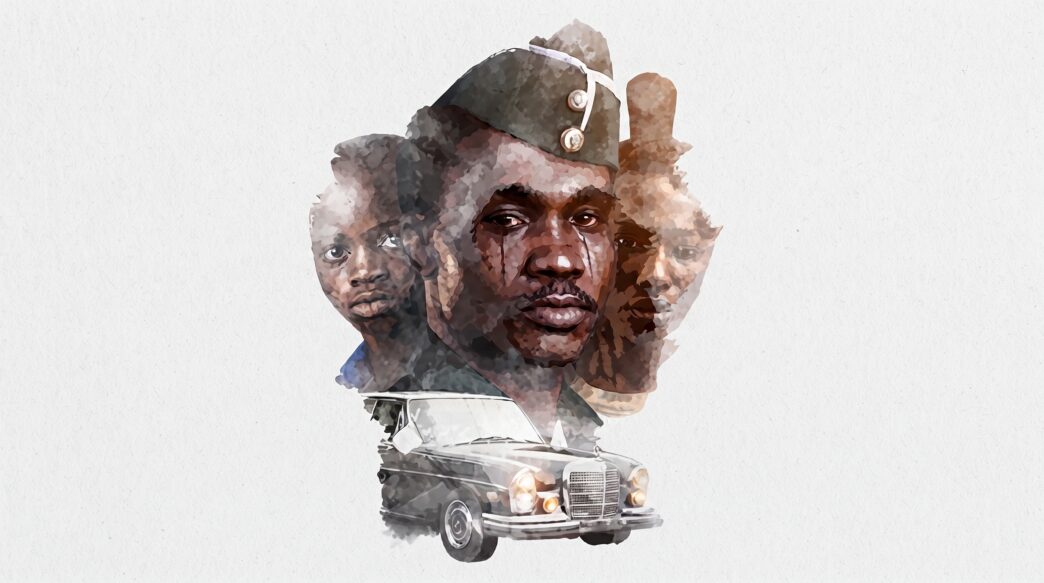
His film, Ramat, has been selected for screening at the Africa International Film Festival (AFRIFF) 2026 in Lagos. Rooted in a childhood memory of seeing his father, a soldier, cry for the first time, the film draws on a deeply personal experience that stayed with him for decades.
For an advertising professional whose career revolves around telling stories for brands, the project offers a compelling reminder: some of the most powerful stories begin long before anyone thinks about an audience, a campaign or a commercial outcome.
A Film Born From a Memory
Babaeko has described Ramat as an attempt to preserve a personal memory rather than a project conceived for the film festival circuit.
He did not set out, he says, to make a festival film. Instead, he carried the story for decades before finding the courage to share it with a wider audience.
At the centre of the story is a moment that challenges a familiar image of strength. A father who serves as a soldier represents discipline, authority and resilience. For a child, seeing that same figure cry can change the way strength is understood.
The moment becomes memorable not simply because it is unexpected, but because it reveals something previously unseen about someone the child thought they knew.
That emotional contrast gives the story its potential power. It takes an ordinary human experience discovering that a parent is vulnerable and places it within a relationship shaped by expectations of masculinity, authority and family.
The film features Gbubemi Ejeye, Samuel Adebola and Durotimi Okutagidi, with Nora Awolowo serving as director of photography. Babaeko has also acknowledged the contributions of Oluwabukola Makinde, Zero Degrees, Seun Akinseloyin, Josh Borrill and others who supported the production.
The personal origin of Ramat matters because it gives the film a foundation beyond the desire to make something commercially successful or attract industry attention.
Its challenge is to translate a memory that is deeply meaningful to its creator into an experience that audiences can recognise as their own.
What Advertising Can Learn From Personal Stories
Advertising professionals spend their careers searching for stories that make people care. They work with research, consumer insights, creative briefs and audience testing to identify the emotions, tensions and experiences that can give a brand meaning.
Those tools are valuable. But the process can sometimes become so focused on finding the right message that it loses sight of the human experience that makes a story worth telling.
The strongest campaigns often begin with a recognisable truth: a parent making a sacrifice, a child seeking approval, a friendship surviving distance or a family finding comfort in a familiar ritual. These moments work because people recognise something of themselves in them.
Babaeko’s decision to turn a childhood memory into a film brings that principle into focus. The starting point was not a product benefit or a communication objective. It was an experience that stayed with him long enough to demand expression.
That does not mean advertising should abandon research, strategy or commercial objectives. Brand storytelling has a different responsibility from personal filmmaking: it must connect an audience’s experience to a brand in a way that is relevant and credible.
The lesson is to begin with the human truth rather than force a story around a predetermined message.
For strategists and creatives, a useful question at the start of a brief is: what is the real human moment behind this product, service or behaviour? The answer may reveal a more meaningful creative direction than a list of product features or broad claims about the target audience.
There is also a difference between a story that merely communicates and one that invites people to recognise themselves. A campaign built around a genuine human tension has the potential to travel beyond its original placement because people have a reason to discuss, remember or share it.
Personal stories are not automatically effective, however. Authenticity does not remove the need for structure, editing and creative judgement. A real experience still has to be shaped into a story that holds attention and gives an audience a reason to care.
That is where the craft matters. The truth may provide the starting point, but the storyteller must still decide what to reveal, what to leave unsaid and how to make the experience meaningful to people who were never there.
The Risks of Turning Private Experiences Into Public Stories
A personal film carries a different set of expectations from a commercial campaign. Audiences may be interested in the person behind the work, but recognition cannot substitute for the quality of the film itself.
Babaeko’s profile in advertising may help attract attention to Ramat. It also creates a test: viewers will want to know whether the finished work can stand independently of its creator’s professional reputation.
There is a similar challenge in translating a private memory into a public narrative. An experience can be emotionally significant to the person who lived it without automatically carrying the same meaning for an audience.
The filmmaker must build a bridge between personal memory and shared understanding.
The performances, cinematography, pacing and storytelling choices will all influence whether the film succeeds in making that connection. The cast and Awolowo’s work behind the camera will therefore be central to how the story reaches viewers.
Babaeko’s account of the film’s origins offers an interesting starting point, but the film itself must do the work.
Its emotional foundation may be authentic; its effectiveness will depend on how that foundation is translated to the screen.
For advertising professionals, this distinction is important. A true story is not necessarily a good story, and a good story does not automatically make a good advertisement.
The task is to preserve the integrity of the human experience while giving it a form that serves its intended audience.
Where Nollywood and Advertising Meet
Ramat also reflects the growing movement of creative talent between Nigeria’s film and advertising industries. Professionals increasingly work across commercials, films, branded content and other forms of visual storytelling, bringing different approaches to audience engagement and production.
The film features Nora Awolowo as director of photography. Awolowo is also associated with Rixel Studios, which has been linked to the film Black Market. Her involvement illustrates how creative professionals can contribute across projects and formats, carrying their experience from one production environment into another.
The exchange can benefit both industries. Advertising brings experience in working to briefs, managing production constraints and delivering against deadlines.
Filmmaking demands sustained character development, visual storytelling and the ability to hold an audience’s attention beyond the few seconds available in many advertisements.
Neither discipline is limited to those characteristics, but the different demands can broaden a creative professional’s approach. An advertising practitioner who makes a film may develop a deeper appreciation for character and narrative development. A filmmaker working on a commercial may bring stronger visual ideas and a more developed sense of storytelling to a brand brief.
Brands stand to benefit when they work with people who understand both commercial objectives and the demands of audience-led storytelling.
The opportunity is not simply to make advertisements that look like films. It is to create work that respects the audience’s attention and offers something worth watching.
For younger creatives, Babaeko’s move is also a reminder that a career does not have to remain within one professional lane. Experience in advertising can provide a foundation for filmmaking, while work in film can strengthen the creative instincts brought back to brand communication.
The Real Test Comes When Audiences Watch
AFRIFF 2026 will provide an important platform for Ramat to meet audiences beyond the personal and professional circles surrounding its production.
Audience responses and critical assessments will help show how effectively the film translates Babaeko’s memory into a story that resonates more widely.
The festival selection is an important milestone, but it is not, by itself, proof of the film’s artistic impact. The more significant question is whether viewers can connect with the experience at the heart of the story, regardless of whether they know Babaeko or understand his standing in the advertising industry.
Its reception may also prompt further conversations about the role of personal experience in creative work and whether more advertising professionals will pursue original storytelling outside commercial assignments.
Ultimately, Ramat offers a useful challenge to an industry accustomed to measuring stories against briefs, budgets and campaign objectives. Those measures remain necessary in advertising, but they are not the source of every powerful idea.
Sometimes, a story begins with a moment that refuses to disappear. It stays with the person who experienced it, changes meaning over time and eventually finds a form through which others can understand it.
Babaeko carried his memory for decades before deciding to share it. With Ramat, he is giving that memory a life beyond his own experience.
For advertising, the lesson is not to replace strategy with sentiment. It is to remember that behind the most effective communication is often a human truth that deserves to be told well.