


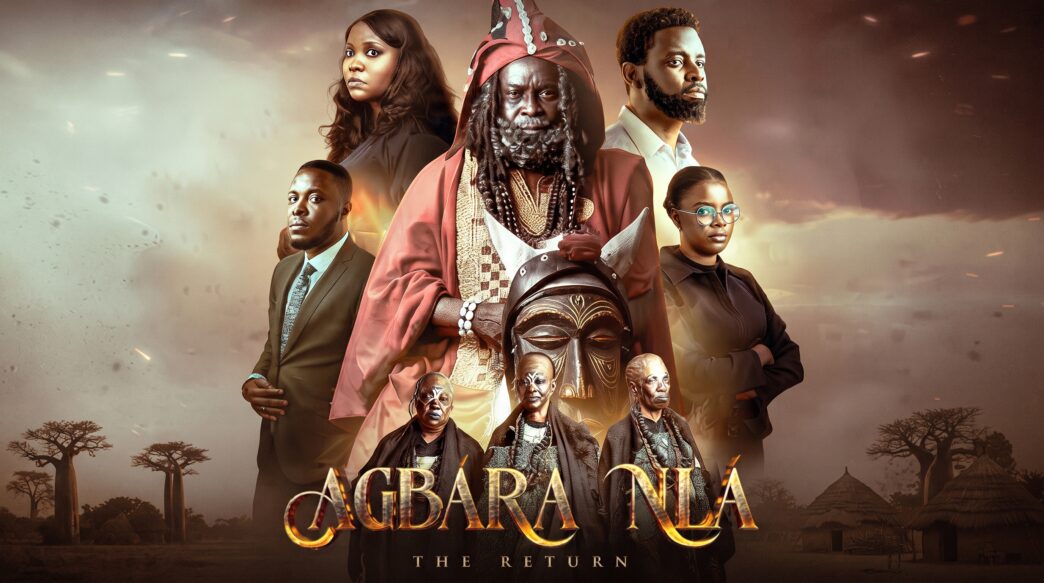
Agbara Nla: The Return has generated more than ₦71 million from cinema preview screenings, putting the faith-based film at the top of the Nigerian box-office conversation as it begins its nationwide theatrical run.
According to Nigerian Box Office data, the film recorded about ₦70 million from 12,134 admissions during its preview period between September 25 and October 1, while distributor Nile Entertainment subsequently announced that earnings had crossed the ₦71 million mark.
The performance was reported as the highest first-day admissions figure recorded in Nigeria in 2026 and the biggest first-day gross for a Nollywood title during the period.
The film officially opened in cinemas on October 1, more than three decades after the original Agbara Nla was released in 1993. The new production is a collaboration between Mount Zion Film Productions, Sozo Films and Circuits, with Damilola Mike-Bamiloye and Joshua Bamiloye directing and Mike Bamiloye, who created the original film, returning to the story.
The Strategic Advantage of a Familiar Story
The commercial performance of Agbara Nla: The Return is difficult to separate from the history of the title itself.
The original Agbara Nla emerged during Nigeria's home-video era and became one of the better-known titles in the country's Christian film culture. Its audience was built over decades through churches, families, television and home-video distribution, giving the property an unusually long cultural life.
That creates a different proposition from launching an entirely new film. A new title has to establish its story, characters, relevance and credibility before audiences decide whether to pay for a cinema ticket. Agbara Nla: The Return entered the market with recognition already attached to its name.
That recognition, however, is only valuable if the new production can convert nostalgia into contemporary demand. The remake therefore has to perform two jobs at once: reassure audiences who remember the original that the story has been treated with respect, while giving younger audiences a reason to experience it for the first time.
The production's connection to the original strengthens that proposition. Mike Bamiloye reprises his role as Isawuru, while his sons Damilola and Joshua Mike-Bamiloye take on directing responsibilities.
That creates continuity between the property that established the story and the generation now taking it into the modern cinema market.
For brand strategists, that is an important distinction. Heritage becomes commercially useful when it is translated, not simply repeated.
The value of an old property lies in the audience memory it has accumulated; the job of the new product is to make that memory relevant to a new consumption environment.

Faith-Based Cinema Has a Distinct Audience Advantage
The result also says something about the commercial potential of faith-based Nigerian cinema.
Faith-based films have access to audience networks that are not entirely dependent on mainstream entertainment culture. Churches, Christian communities, families and existing film audiences can create strong channels for awareness and recommendation, particularly when a title already has cultural recognition.
Agbara Nla: The Return appears to have benefited from that combination of familiarity and community. Nile Entertainment has described the performance as the biggest opening for a faith-based film, while also reporting the film's preview gross as the biggest single-day preview gross in West Africa. The latter claim comes from the distributor; Nigerian Box Office data separately records approximately ₦70 million and 12,134 admissions.
That distinction matters because the opportunity is not simply about putting a Christian film into cinemas. It is about understanding a specific audience well enough to build a theatrical proposition around its existing behaviour, relationships and cultural interests.
The film also demonstrates the commercial value of audience trust. Mount Zion has spent decades building recognition within Christian entertainment, meaning the production carries an established level of credibility before the first ticket is sold.
That kind of accumulated brand equity can reduce some of the awareness burden that comes with launching a completely new entertainment property.
For marketers, the lesson extends beyond film. Audience communities can become distribution assets when brands understand how people already gather, communicate and make decisions.
The strongest campaigns do not always create new communities; sometimes they activate communities that already exist.
What Agbara Nla Means for Nollywood
The timing of the film's performance adds another layer to the story.
Nollywood has already produced several notable box-office performances in 2026, while September also saw Black Market attract 51,000 qualifying viewers to a single screening at Tafawa Balewa Square in Lagos, earning a Guinness World Records recognition for the largest audience at a film screening at a single location.
The two achievements demonstrate very different approaches to audience mobilisation. Black Market turned cinema into a large-scale public event, using spectacle and scale to create an extraordinary moment. Agbara Nla: The Return, by contrast, is drawing on an established story, a loyal audience and a community with a long-standing relationship with its creators.
That variety is commercially significant. It suggests that Nigerian cinema does not have to rely on one formula for audience growth. Different genres and properties can build demand through different combinations of cultural relevance, community, heritage, spectacle and entertainment value.
For Agbara Nla: The Return, the immediate ₦71 million-plus performance is a strong start, but the more important commercial test comes next.
Preview and opening numbers demonstrate the ability to generate initial demand; sustained box-office performance will show whether the film can maintain momentum through word of mouth, repeat recommendations, cinema availability and audiences beyond its established core.
The remake has already demonstrated the value of bringing a recognised Nigerian property back to the market. The bigger opportunity is what happens when that heritage is combined with contemporary production, strategic theatrical distribution and a clear understanding of the audience that made the original matter in the first place.