

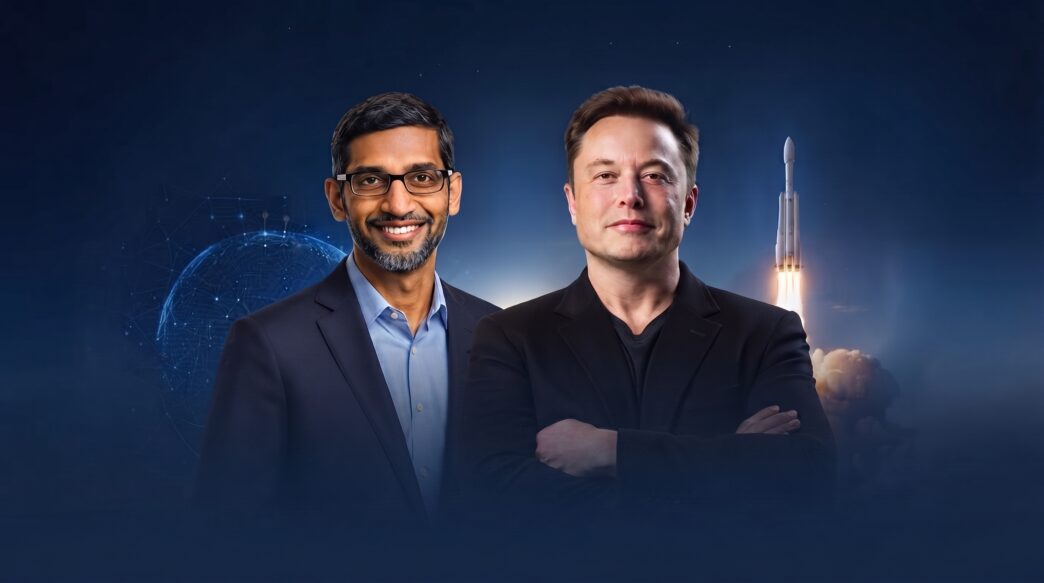
Few corporate bets have aged as well as Alphabet's 2015 investment in SpaceX. What started as a 900 million dollar stake in a rocket company then valued around 10 billion dollars has ballooned into a position worth roughly 94.1 billion dollars, following SpaceX's public listing earlier this year.
The stake didn't grow in a straight line. Multiple funding rounds over the following decade diluted Alphabet's ownership percentage, but the company never sold down its position. That patience paid off dramatically once SpaceX went public on June 12, 2026, at a valuation of about 1.8 trillion dollars, an IPO that raised roughly 85.7 billion dollars and instantly made Alphabet the company's largest individual institutional shareholder. By the end of June, Alphabet's 551.2 million SpaceX shares were valued at that headline 94.1 billion dollar figure.
The scale of that gain shows up clearly in Alphabet's second quarter numbers. Revenue for the quarter hit 119.8 billion dollars, with net income at 112.1 billion dollars. But the standout figure was in "other income," which recorded a 98 billion dollar gain, driven almost entirely by unrealised gains on equity holdings, with the SpaceX stake doing most of the heavy lifting there.
That word, unrealised, matters more than it might seem. Alphabet hasn't sold a single SpaceX share, so none of that 94.1 billion dollars has actually landed as cash. It exists on paper, tied to wherever SpaceX's stock happens to be trading at any given moment. And in fact, SpaceX shares have already slipped below their June quarter-end price since then, meaning the real-time value of Alphabet's stake is lower today than the number reported for that quarter. Gains like this can just as easily shrink as grow, depending entirely on market sentiment toward SpaceX going forward.
It would be a mistake, though, to read the SpaceX windfall as the only thing propping up Alphabet's results. Google Cloud had a genuinely strong quarter on its own, with revenue jumping 82 percent to 24.8 billion dollars, fuelled by rising demand for AI infrastructure and services.
That growth reflects Alphabet's actual operating business performing well, separate entirely from paper gains tied to a startup investment made a decade ago.
Put the two stories side by side and you get a fuller picture of where Alphabet stands. One part of its balance sheet is inflated by an early, high-conviction bet that happened to pay off spectacularly once SpaceX finally went public.
The other part shows a core cloud business genuinely scaling on the back of AI demand. Investors and analysts reading Alphabet's quarterly results need to keep those two things separate, since one reflects sustainable business growth and the other reflects a market valuation that could just as easily move in the opposite direction next quarter.
For now, the SpaceX position stands as a reminder of what a decade of patience can do to an early stage bet, and a caution about how quickly headline profit numbers can be shaped by holdings a company has never actually cashed in.

Add a Comment