

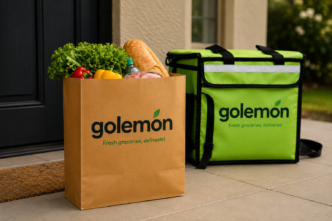

GoLemon, the Lagos-based grocery delivery startup founded by four former Paystack executives, has shut down after 28 months of operations, ending an attempt to build a large-basket grocery business for households across Lagos. The company stopped accepting new orders in July and said it could not raise the additional funding required to continue operating, despite having delivered tens of thousands of orders and served about 40,000 registered customers.
In its farewell statement, GoLemon said it had found clear demand for planned, large-basket grocery shopping, but could not make the broader business self-sustaining within the capital and time available to it. The company reported an average basket size of about ₦43,700, while other reports put the total value of groceries moved through the platform at more than ₦2 billion.
The shutdown is therefore not a simple story about a startup that could not find customers; the more interesting question is why a business can demonstrate demand, generate positive contribution from individual orders, and still run out of road.
The Business Was Working, Until It Wasn't
GoLemon's model was different from the quick-commerce businesses built around delivering one or two items as quickly as possible. The company focused on planned household shopping, sourcing products directly from farmers and manufacturers, operating its own warehouses, managing quality control, and building the technology and fulfilment infrastructure required to move large grocery baskets across Lagos.
That model gave the company greater control over the customer experience and potentially better economics on larger orders, but it also meant carrying a heavier operational structure.
According to reporting based on GoLemon's own explanation, individual orders were generating positive contribution after direct costs, with larger baskets and denser delivery areas producing better economics; the problem was that order volumes never became dense enough for those contributions to consistently cover the company's broader fixed costs.
That distinction is important because it separates product demand from business sustainability. GoLemon had customers, it had orders, and customers were willing to spend significant amounts on individual purchases, but the company needed considerably more volume before the underlying economics could support the infrastructure it had built.
The startup also explored strategic options before shutting down. In December 2025, it partnered with Chowdeck to supply inventory for the delivery company's dark stores while continuing to operate its own platform, but the relationship did not ultimately provide the path to scale or consolidation that GoLemon needed.
Lagos Wants Grocery Delivery. Lagos Is Expensive to Serve.
The larger story behind GoLemon's closure is the difficulty of building consumer delivery businesses in Nigeria, particularly when the model requires significant infrastructure before it can reach sufficient scale.
Lagos has the customer density, smartphone adoption, and appetite for convenience that make grocery delivery look attractive on paper; the difficulty comes from converting that demand into enough frequent, high-value transactions to support warehousing, inventory, fulfilment, logistics, technology, staff, and customer acquisition costs.
GoLemon is not the first company to discover this problem. Jumia and Bolt both exited food and grocery delivery businesses in Africa before GoLemon's launch, while other Nigerian consumer delivery companies have also scaled back or shut down as investors have become more focused on sustainable economics rather than growth supported indefinitely by fresh capital.
That funding environment matters. African technology startups raised about $1.44 billion in the first half of 2026, according to TechCabal Insights data cited by The1News, but the number of deals fell sharply and early-stage funding declined, indicating that capital remains available but is becoming more selective.
For businesses like GoLemon, that shift creates a particularly difficult situation because the company may need substantial capital to reach the order density required for profitability, while investors increasingly want evidence that the business can survive without another large funding round.
The Lesson Is Bigger Than GoLemon
GoLemon's shutdown leaves behind a business that served 40,000 registered customers, delivered tens of thousands of orders, moved more than ₦2 billion worth of groceries and demonstrated that Lagos consumers were willing to buy substantial grocery baskets online.
What it could not demonstrate within its runway was that those transactions could happen frequently and densely enough to cover the fixed costs of the business without another round of external funding.That is the uncomfortable lesson for African consumer technology: a real market does not automatically create a sustainable business.
The demand for grocery delivery in Lagos is real, but the economics of serving that demand remain difficult, particularly when a company owns significant parts of the supply chain and needs considerable volume before its infrastructure becomes efficient.
GoLemon's founders may have proved that Nigerians will buy groceries online in large baskets; what the shutdown shows is that proving customers want the product is only the first part of the challenge. The harder question is whether the business can reach enough customers, often enough, within a cost structure that works before the money runs out.For African startups entering capital-intensive consumer markets, that may be the more important metric to watch.