
The Golden Penny Food Festival has won the EDGE Outstanding CSR Initiative of the Year at the Marketing Edge EDGE Awards in Lagos, recognising the festival’s sustained commitment to Nigerian food culture and the shared experiences it creates around food, entertainment and consumer choice. It is a well-earned honour, particularly for an initiative that has developed over time rather than appearing as a one-off campaign designed around an award cycle.
It is also a useful moment to ask a question the Nigerian marketing industry does not ask often enough: what actually makes something corporate social responsibility, rather than a well-run marketing campaign with a compelling social story attached to it?FMN Group describes the recognition as more than another award on the shelf, presenting the festival as an initiative that has turned the simple act of eating into a shared consumer experience built around food, culture, entertainment and choice.
There is nothing inaccurate about that description, and there is certainly nothing unusual about a food company creating an experience around food. In fact, that is exactly what a strong marketing strategy should do when it understands the category it operates in and the cultural behaviour surrounding it. The overlap between the two is therefore where the more interesting question begins.
Traditional CSR in Nigeria has generally been easier to identify. A company builds a borehole in a community, funds a scholarship programme, supports healthcare or contributes to a social cause that exists separately from the company's core commercial activity. The relationship between the company and the beneficiary may be important, but the initiative itself is not necessarily designed to sell the company's products or deepen its relationship with consumers.
A food festival organised by a food company, built around food culture and connected to the company's own brands and products, sits in a different category because the social experience and the commercial strategy are deliberately intertwined.
That is not automatically a criticism, and it should not be treated as one. For years, marketers have argued that the sharp distinction between CSR and marketing is becoming less useful, particularly as brands increasingly recognise that their commercial success can be connected to the communities, cultures and social environments in which they operate.
A company can create something that has genuine cultural or community value while also expecting that experience to strengthen its brand, improve consumer preference and ultimately contribute to commercial performance.
Golden Penny's Food Festival is a good example of that model because it is built around a genuine understanding of the importance of food in Nigerian life, where food is connected to family, celebration, hospitality, identity and social interaction, rather than simply being treated as a functional product category.
The important question, then, is whether calling this CSR rather than brand marketing changes how the initiative should be judged, and whether the distinction matters to the people experiencing it. A consumer attending the Golden Penny Food Festival is unlikely to stop and consider whether they are participating in a CSR initiative or a sophisticated experiential marketing programme.
They are experiencing food, entertainment, culture and community, and the value of that experience exists regardless of the label attached to it. From the consumer's perspective, the distinction may therefore be almost irrelevant.
The label matters more within the marketing industry, particularly because CSR awards carry a particular kind of credibility.
They suggest that the initiative being recognised represents a company's contribution to society beyond what conventional marketing would ordinarily deliver.
If a brand-led consumer activation can qualify for a CSR award primarily because it has been executed well, sustained over time and creates positive associations around the brand, then the industry has to consider whether the CSR category is becoming broad enough to absorb almost any meaningful brand experience.
This is not a problem unique to Golden Penny or FMN. Across Nigerian marketing, the boundaries between CSR, brand purpose, cause marketing, experiential marketing and community engagement have become increasingly difficult to define, while award categories have not always evolved at the same pace.
A festival can create real cultural value, generate genuine enjoyment, bring people together and strengthen the relationship between a brand and its audience, while still being, at its core, a sophisticated marketing programme designed to build consumer preference and commercial value. Recognising that reality does not make the initiative less valuable; if anything, it allows the industry to appreciate the work for what it actually represents.
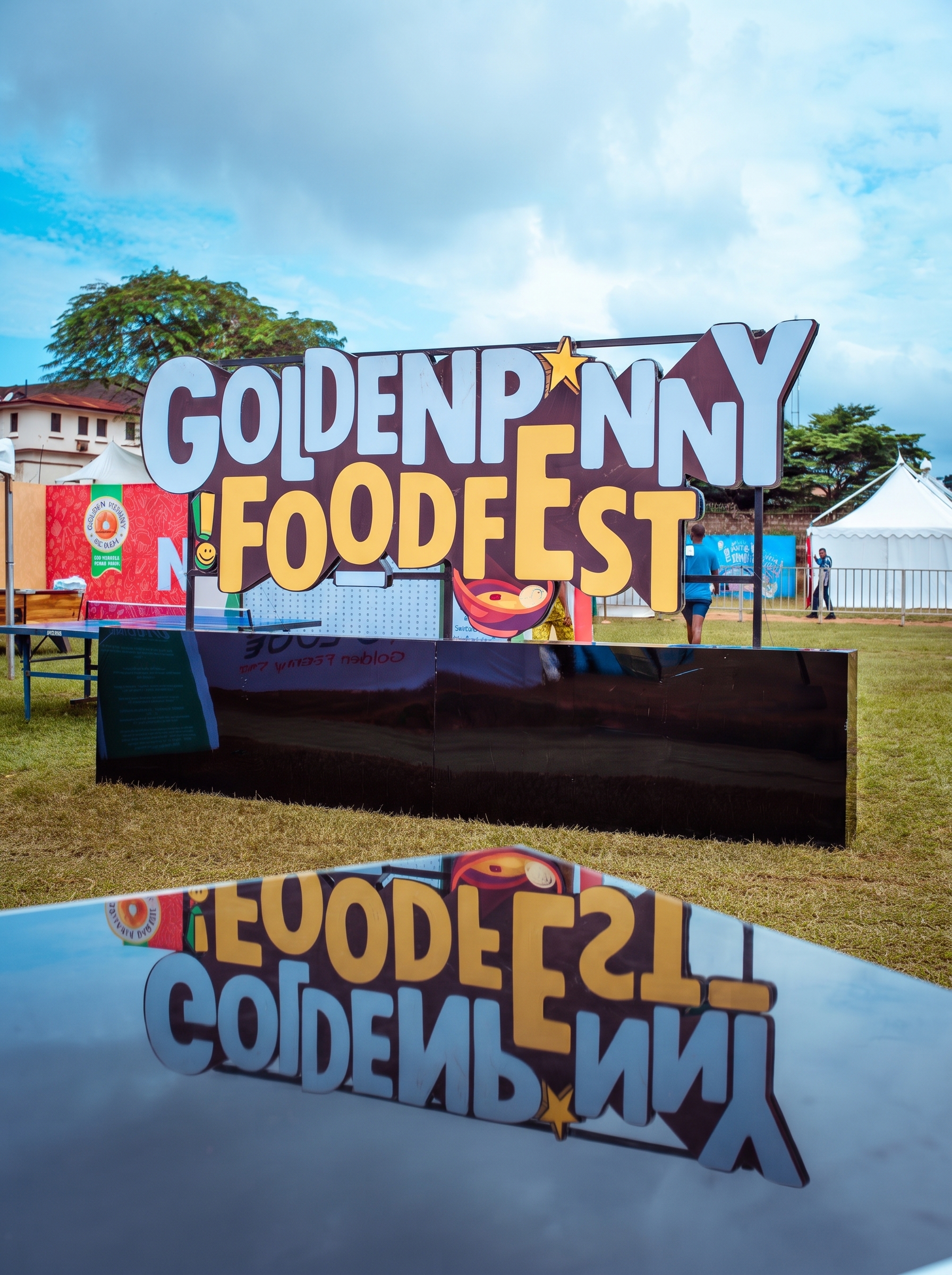
Golden Penny has clearly built something more substantial than a short-term activation. The festival has developed over multiple iterations and has grown from earlier food-focused initiatives into a broader platform around Nigerian food culture and consumer experience. That consistency matters because sustained brand platforms are considerably harder to build than individual campaigns.
They require investment, operational discipline, audience understanding and a proposition strong enough to make consumers want to return. The fact that the Food Festival has developed into a recognised property suggests that Golden Penny has created something with a degree of cultural and commercial relevance that goes beyond a single campaign cycle.
There is therefore no reason to take away from the achievement simply because its commercial purpose is visible. The more useful question for the industry is what CSR should actually mean at a time when so much of the work brands do in communities is being developed by marketing teams rather than separate CSR departments.
If commercial strategy and social contribution increasingly operate together, award bodies and marketers need clearer distinctions between initiatives that create brand-led community experiences and initiatives whose primary purpose is to address a social need independently of the company's commercial interests.
Both deserve recognition, but they are not the same thing, and treating them as interchangeable risks weakening the meaning of both categories. A recurring food festival can be an excellent marketing platform and create genuine value for consumers without necessarily being CSR in the traditional sense.
Equally, a company does not have to remove every commercial consideration from an initiative before its contribution to society becomes meaningful. The industry needs a more sophisticated way of evaluating these things, one that considers intent, beneficiaries, measurable impact, commercial connection and the extent to which the initiative addresses a social need beyond the brand's own interests.
There is also a useful lesson here for other Nigerian brands. Golden Penny's recognition demonstrates the value of building long-term platforms around genuine cultural insights rather than relying entirely on short campaign bursts.
The strength of the Food Festival is not simply that it creates a positive association with Golden Penny; it is that the brand has found a space where its category, Nigerian culture and consumer behaviour naturally meet, then invested in that space consistently enough for it to become recognisable.
Whether that is ultimately classified as CSR, experiential marketing or brand experience, the discipline behind building and sustaining it is what makes the initiative commercially significant.
For FMN Group, the award is a strong outcome regardless of the category in which it sits. It provides third-party validation, creates industry visibility and gives the company another reason to tell the story of an initiative that has become an important part of Golden Penny's consumer engagement strategy.
There is little incentive for the company to challenge the classification when the recognition works in its favour, and that is precisely why the responsibility for maintaining meaningful distinctions sits with the wider industry and the institutions that define its awards.
The more productive response to Golden Penny's win, therefore, is not to question whether the festival deserves recognition. It clearly does. The question is whether Nigerian marketing has become too comfortable using CSR as an umbrella term for any brand initiative that creates a positive social or cultural experience.
As more companies move into community building, cultural platforms, purpose-led campaigns and experiential marketing, the industry will need to become more precise about what those activities actually represent.
Until then, more festivals, activations and brand-led community initiatives will continue to compete for CSR recognition, and many of them will genuinely benefit consumers and communities. That is not necessarily a bad thing.
It simply means the industry should be honest about what it is rewarding, because if everything meaningful a brand does in public is called CSR, the term eventually loses the distinction that made the recognition valuable in the first place.