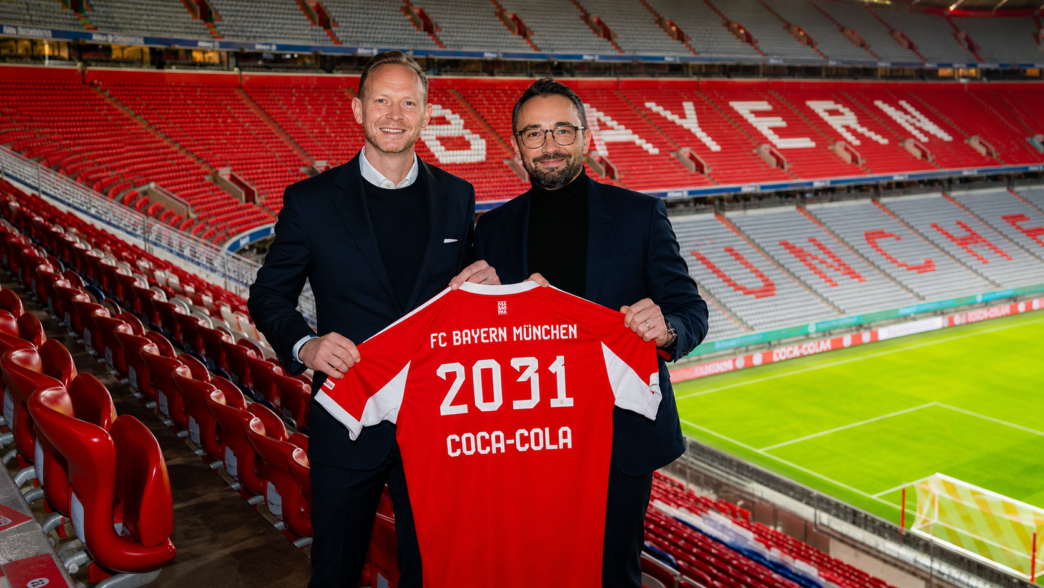
FC Bayern Munich and Coca-Cola have extended their partnership for another five years, keeping the global beverage company as an official sponsor of the Bundesliga club through 2031. The renewal builds on a collaboration that first took root in 1968, making it one of the longest-running commercial relationships in world football.
That is not a headline you see often. Most sports sponsorships today run for two or three years, get renegotiated under pressure, or get dropped when a brand finds a shinier opportunity. This one has been running since before most marketing directors were born.
What the Deal Actually Covers
Under the renewed agreement, Coca-Cola will continue to supply its full range of non-alcoholic beverages at the Allianz Arena across home matches and club events, while the partnership now expands to include fan engagement activations across both the FC Bayern men's and women's teams.
The most significant addition is Powerade. The agreement now extends beyond traditional beverage sponsorship into athlete performance and recovery, reflecting the growing commercial importance of sports nutrition within elite football. That is a meaningful shift. Coca-Cola is no longer just the drink in the stands. It is now part of how the club positions its performance and recovery story, which puts the brand closer to the sport itself rather than just the spectacle around it.
The announcement also strengthens Coca-Cola's football portfolio during a significant year for the company, as it serves as a premium partner of the 2026 FIFA World Cup. Renewing with Bayern right now is not coincidental. It keeps Coca-Cola visible at the highest levels of the sport during one of the biggest commercial windows in football history.
Why Longevity Is the Strategy
The easy read on this story is that two big brands like each other and renewed their deal. The more useful read is about what long-term partnerships actually do for a brand that short-term ones cannot.
When a sponsorship runs for decades, it stops being a transaction and starts being an association. Most fans do not consciously think about who sponsors their club. But they absorb brand presence over years of matchdays, campaigns, and stadium experiences in ways that are very difficult to build quickly and very expensive to replicate from scratch.
FC Bayern's strategy here is clear: retaining long-standing commercial partners while evolving sponsorships to deliver greater value beyond traditional branding. That is why Powerade was added. The partnership needed to grow to stay relevant, and both sides understood that. A 58-year deal that looks exactly the same as it did in 1968 would be a museum piece. A 58-year deal that keeps evolving is a commercial asset.
FC Bayern Board Member for Marketing and Sales Rouven Kasper put it plainly: "Long-term and reliable partnerships are very much to FC Bayern's liking, and with Coca-Cola, we share a success story that now goes back over 50 years."
What Other Brands Can Take From This
Most brands do not have 58 years to spend building a sponsorship. But the principle still applies at any scale.
Sponsorships that are treated as placements, logos on a shirt, banners in a stadium, produce placement value. Sponsorships that are treated as relationships, where both parties invest in activation, innovation, and fan experience over time, produce something closer to brand equity. The difference between the two is not always visible in year one. It becomes very visible by year ten.
The addition of Powerade into this partnership is the practical demonstration of that principle. FC Bayern and Coca-Cola aim to break new ground in the isotonic and hydration drinks sector and support the sporting performance of their professional football teams. That is a brand moving from passive presence to active integration, which is where the real commercial value of sports sponsorship lives.
For any marketing professional evaluating a sponsorship decision this year, this renewal is worth studying. The question it asks is simple: are you building a placement or a partnership?