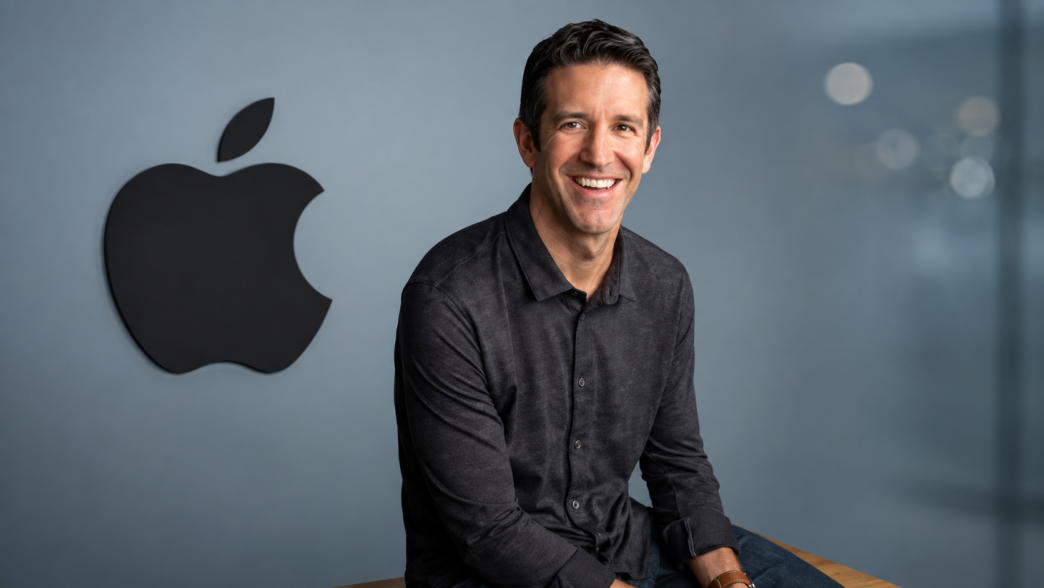
Tomorrow, September 1, 2026, Apple gets a new chief executive officer. John Ternus, age 50, takes over from Tim Cook after nearly 15 years of Cook leading the company through one of the most remarkable corporate runs in modern business history. Cook moves to a newly created role as executive chairman. Arthur Levinson, who has served as Apple's non-executive chairman for the past 15 years, becomes lead independent director.
The transition was announced in April and has been months in the making. It was unanimously approved by Apple's board of directors. This is the first chief executive succession at Apple since Cook himself took over from Steve Jobs in August 2011. That transition happened under the most painful circumstances imaginable.
This one has been planned carefully, communicated clearly, and executed in an orderly way that is almost the exact opposite of what the industry feared an Apple succession might look like.
Who Tim Cook Is Leaving Behind
When Tim Cook took over Apple in 2011, the company's market capitalisation was approximately $350 billion. Today it sits near $4 trillion. Revenue has nearly quadrupled. The iPhone has become the most profitable consumer product in history.
The App Store has created an entirely new category of commerce. AirPods, Apple Watch, and the services business have added hundreds of billions in annual revenue that did not exist when Cook became chief executive.
Cook is a supply chain operator turned chief executive who turned Apple's hardware advantage into a platform that billions of people live inside. He did it by being disciplined, consistent, and relentlessly focused on quality.
He is also one of the most visible corporate advocates for privacy, equality, and environmental responsibility of the past decade, and those positions became part of what Apple means as a brand rather than just an afterthought to its product strategy.
In his statement, Cook described his tenure in language that was characteristically restrained: "It has been the greatest privilege of my life to be the chief executive officer of Apple and to have been trusted to lead such an extraordinary company." The understatement, from a man who led the most valuable company in the world for 15 years, is itself very Apple.
Who John Ternus Is
Ternus joined Apple in 2001 as a mechanical engineer, having previously worked at Virtual Research Systems. He spent a decade on the product design team before becoming Vice President of Hardware Engineering in 2013 and Senior Vice President in 2021.
He is, at his core, a product person. His fingerprints are on the MacBook Neo, the iPhone 17 lineup, and the AirPods hearing health capabilities that Apple introduced as a medical-grade feature last year.
He is also, unusually for the person about to become chief executive of the world's most valuable company, almost entirely unknown to the general public. His name does not carry the cultural recognition of Tim Cook's, and it certainly does not carry the mythological weight that Steve Jobs's name still does fifteen years after his death.
That relative anonymity may be an advantage rather than a liability. It means Ternus gets to define himself on his own terms rather than being measured constantly against a predecessor's personality.
Apple's lead independent director Arthur Levinson described the appointment in terms of what Ternus brings rather than how he compares to Cook: "We believe John is the best possible leader to succeed Tim and as he transitions to chief executive we know his love of Apple, his leadership, deep technical knowledge, and relentless focus on creating great products will help lead Apple to an extraordinary future."
What He Inherits
Ternus inherits Apple at a moment of genuine transition across the technology industry. Artificial intelligence is reshaping what consumers expect from their devices, and Apple, which spent years being criticised for moving more slowly in this area than its competitors, has responded with Apple Intelligence, a platform-level artificial intelligence system set to roll out with iOS 19 in September 2026.
Apple also signed a $1 billion licensing deal with Google for Gemini capabilities, signalling a pragmatic willingness to partner externally even as it continues investing in its own models.
The artificial intelligence strategy is the most important brief Ternus inherits, and it is the one where the hardware engineering background he brings will matter most. Apple's competitive advantage in artificial intelligence is not its models.
It is the integration between its silicon, its operating system, and its devices. That integration is a hardware engineering problem as much as it is a software one, and Ternus has spent 25 years at Apple understanding how that integration works at the deepest level.
Cook will continue to engage with policymakers and governments globally in his executive chairman role, which means Ternus inherits the product and technology side of the business while Cook handles the geopolitical dimensions that have become an increasingly significant part of running a company with Apple's global footprint.
What This Means for the Brand
Apple has always been more than a technology company. It is one of the most valuable consumer brands in the world, and a significant part of that value comes from the trust that hundreds of millions of people place in how Apple handles their privacy, their data, and their experience. Tim Cook built a great deal of that trust over 15 years of consistent leadership. Ternus inherits it starting tomorrow.
The first thing Ternus will do as chief executive is ship iOS 19 alongside the iPhone 17 lineup, the most significant Apple Intelligence rollout the company has made. It is, in marketing terms, a statement of intent delivered on his first day in the job.
If the product delivers, it announces his leadership with the clearest possible signal: the products are still excellent, the direction is still forward, and Apple under Ternus is Apple continuing to earn the trust it has been given.