
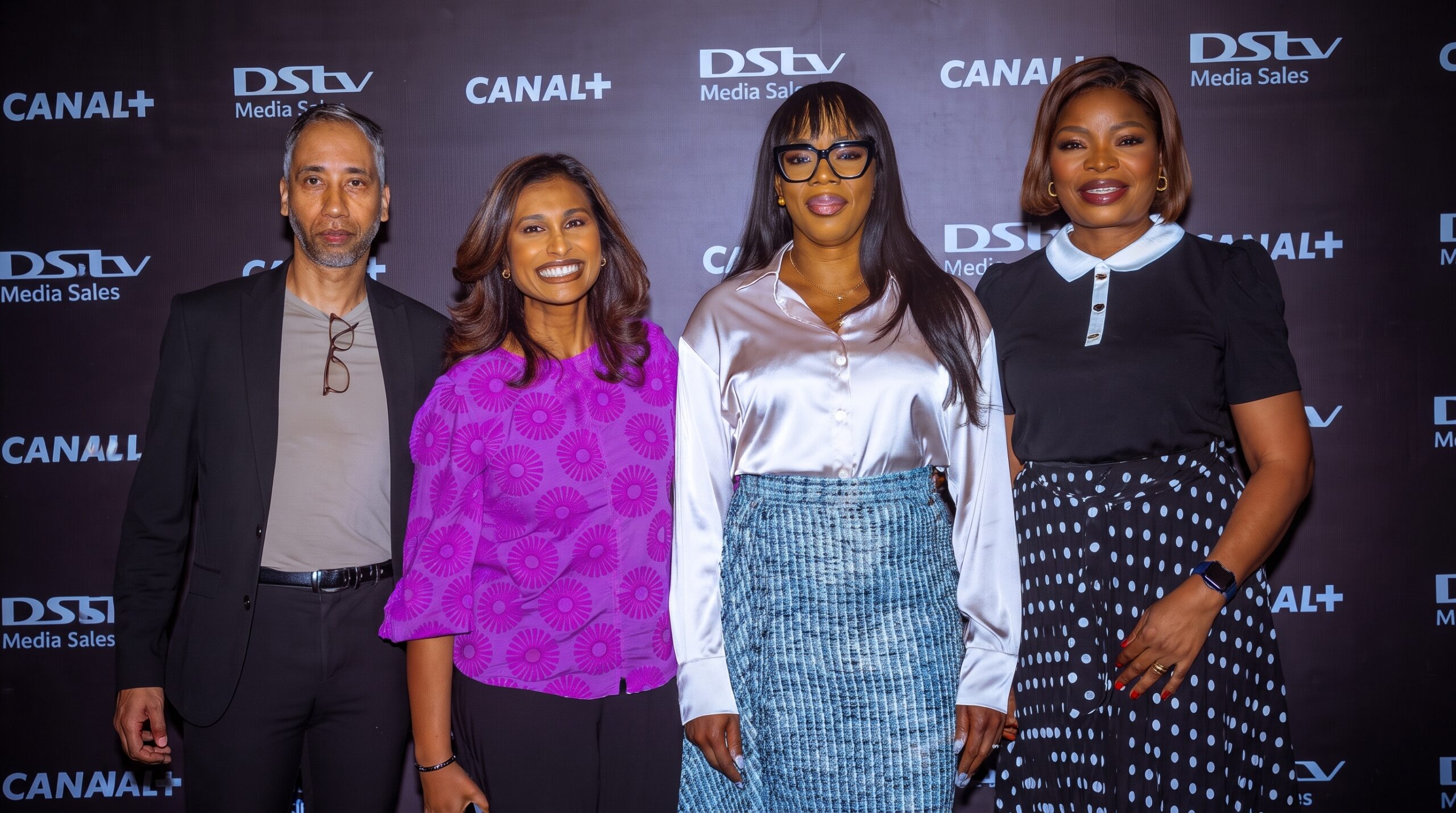
DStv Media Sales, the advertising sales arm of MultiChoice, a CANAL+ company, has brought together advertisers and industry decision-makers in Lagos to discuss opportunities emerging from the integration of MultiChoice and CANAL+.
The event, held at The Royal Box, Victoria Island, on Thursday, was themed Africa Forward. It examined the first year of the transition and explored how the combined businesses could help brands reach audiences across an evolving African media landscape.
A Wider Advertising Offer Across Platforms
Doris Ohanugo, Senior Vice President of DStv Media Sales Nigeria, opened the gathering by highlighting the need for brands to adapt as media consumption changes.
She described the event as an opportunity to exchange insights, strengthen industry partnerships and explore ways to deliver greater value to advertisers.
In her keynote address, Fahmeeda Cassim-Surtee, Group CEO of DStv Media Sales, said the integration of MultiChoice and CANAL+ creates new opportunities for commercial partners.
She pointed to the group's expanded African footprint and premium content offering as assets that could help brands connect with audiences at scale.
She also highlighted investments in tools designed to simplify campaign planning and execution as viewing habits evolve.
According to the organisers, the integration of DStv Media Sales and CANAL+ Advertising brings together complementary content, distribution networks and commercial capabilities.
The combined operation connects brands to more than 23.5 million households and approximately 100 million people across 50 countries.
The advertising offer spans linear television, video-on-demand services such as Catch Up, and streaming platforms such as DStv Stream. This gives advertisers the opportunity to plan campaigns across multiple viewing environments through a broader commercial relationship.
What the Integration Means for Advertisers
For advertisers, the central proposition is greater coordination across platforms. A combined sales operation could simplify access to television, on-demand and streaming inventory, reducing the need to manage separate commercial relationships for different parts of the audience.
The proposition comes as viewing increasingly spans live television, catch-up services and streaming. For media planners, the challenge is to reach relevant audiences across these environments while maintaining a clear view of campaign delivery and performance.
Recent changes to the local offering also make audience distribution worth monitoring. Canal+ Nigeria has begun refreshing DStv and GOtv packages and consolidating four M-Net Movies channels into three.
Such changes can affect channel availability and viewing patterns, making audience data an important consideration for advertisers planning future campaigns.
However, the scale of the combined operation is only part of the picture. Advertisers will need clear information on how audiences are measured across linear television and streaming, how duplicate audiences are accounted for, and how campaign performance is reported across platforms.
Nigeria-specific audience figures and pricing will also be important to brands evaluating the offer. The figures presented at the event cover 50 countries, while the information shared does not specify Nigeria-only reach or provide pricing details for cross-platform campaigns.
The effectiveness of the integration will therefore depend not only on the breadth of its inventory, but also on the quality of the planning tools, audience insights and reporting available to advertisers and agencies.
Africa Forward signals DStv Media Sales' intention to position the combined business as a partner for brands seeking reach across screens and markets.
The next measure of progress will be how effectively that wider offer translates into practical campaign planning, measurable results and value for advertisers.