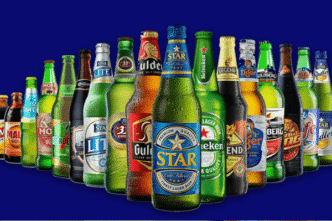
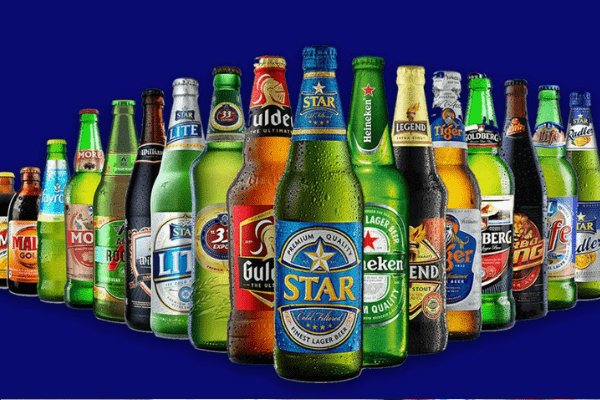
Nigeria's three listed brewing companies spent more than N220 billion on advertising, sales support, and distribution in the first half of 2026. That is more than N10 billion a month from Nigerian Breweries alone, across advertising and distribution combined.
The three companies together posted N1.41 trillion in revenue for the period. On the surface, the math looks straightforward: spend more, earn more. But the story underneath the numbers is more interesting than the totals suggest, and it reveals something important about how the competitive dynamics of the Nigerian consumer goods market are actually shifting.
Three Companies, Three Very Different Strategies.
Nigerian Breweries Plc led the spending, committing roughly N72 billion to advertising and sales support and another N68 billion to distribution, averaging more than N10 billion a month on each line item. International Breweries spent a combined N43 billion on advertising and distribution.
Guinness Nigeria took a different path, with marketing spend actually falling to N16.1 billion from N18 billion in the same period of 2025, even as distribution spending climbed to N24 billion from N19.7 billion.
These are not three companies doing the same thing at different budgets. They are three companies making fundamentally different bets about where the commercial leverage in this market actually sits.
Nigerian Breweries is betting that visibility and distribution are both essential at scale, that you cannot afford to lose shelf space or consumer attention when you are the market leader in a category under pressure. The spending is defensive as much as it is offensive, protecting a position rather than simply growing one. International Breweries grew its gross profit from N121 billion to N143 billion despite flat revenue of N342 billion.
That result, stronger profitability without revenue growth, points to a brand that is managing its cost base efficiently and extracting more value from the customers it already has, rather than trying to add new ones through higher spending. Guinness Nigeria's approach is the most strategically interesting.
The brand is cutting marketing spend while growing distribution spend, and doing so because it is now leaning on Tolaram Group's established distribution network following Tolaram's acquisition of the business. Revenue still grew 11.8 per cent to N265 billion, suggesting the lower marketing spend is not hurting the top line, at least not yet.
The Structural Challenge Behind the Numbers
What none of these spending figures can resolve on their own is the structural challenge the industry is facing.
While two of the three brewers delivered meaningful revenue growth during the period, the industry continues to face a longer-term structural challenge as younger Nigerians increasingly shift away from traditional beer consumption toward spirits, wine, ready-to-drink beverages, and non-alcoholic alternatives.
This is the part of the marketing conversation that the quarterly revenue numbers do not capture. Advertising spend can win shelf space. It can keep a brand visible and top of mind. But it cannot, on its own, reverse a generational shift in what people choose to drink.
The brewers are all responding to this reality in their own ways. Nigerian Breweries has been expanding its non-alcoholic malt portfolio and investing in products that sit outside the traditional beer category.
Guinness Nigeria has been targeting younger consumers through cultural sponsorships including BBNaija. International Breweries has been restructuring its portfolio around brands with stronger margin profiles.
What the N220 Billion Is Really Buying
Marketing spend at this scale in the Nigerian beverage market is buying three things simultaneously, and not all three are created equal.The first is awareness. At the consumer level, these brands are already known.
The spend here is largely defensive, ensuring that no competitor finds a gap in visibility to exploit.The second is trade relationships. A significant portion of the distribution spend in the brewing industry goes directly to managing relationships with retailers, distributors, and wholesalers who control access to the shelves and the coolers where the decision to buy is actually made. In a market where informal retail still dominates, those relationships are not built by advertising.
They are built by showing up consistently, with the right products at the right prices.The third is something harder to define and harder to measure: cultural relevance. The brands in this category that have maintained the strongest positions are the ones that have found ways to be genuinely part of Nigerian life rather than simply visible in it.
That is the play behind Guinness's BBNaija sponsorship and the Open For More consumer promotion. It is the play behind Star Lager's decades of sports sponsorship. Spending N72 billion on advertising can buy reach. It cannot buy belonging.
The brands that figure out the difference will be the ones that hold their positions when the structural shift in consumer preference accelerates.
The Verdict
Was N220 billion worth spending? Yes, if the alternative was losing distribution and shelf presence in one of the most competitive consumer goods categories in Africa's largest market. No, if the expectation was that spending alone would reverse the longer-term shift in what young Nigerians choose to drink.
The most important number in this story is not the N220 billion. It is what each of these three companies does with the next five years of portfolio, product, and brand development as the category they built their businesses on continues to change.