


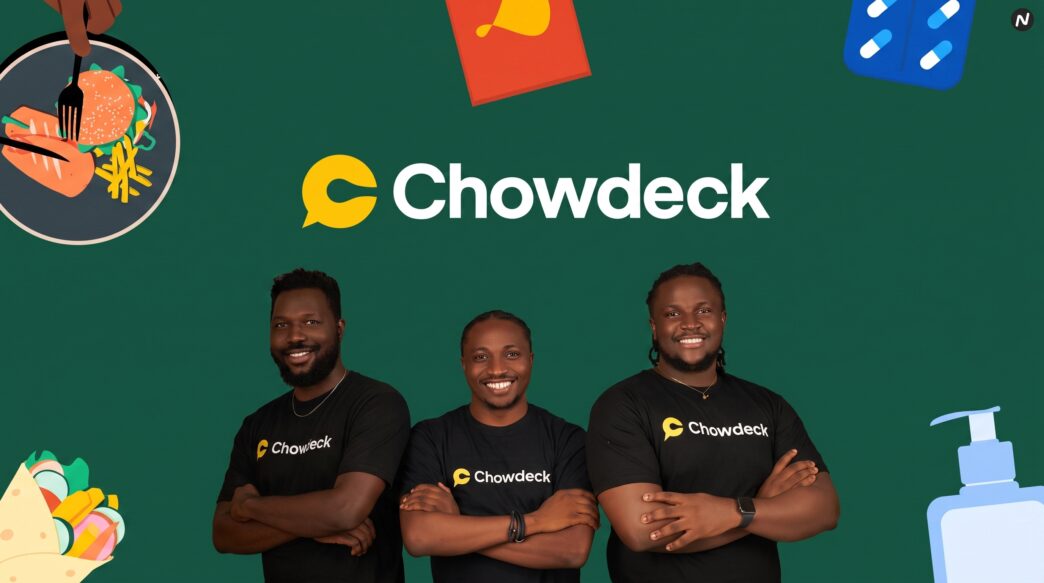
Femi Aluko, co-founder and CEO of Chowdeck, Nigeria's fastest-growing food delivery platform, shared a consumer spending pattern at the UBA Business Series that is as revealing as it is familiar to anyone who has lived on a Nigerian salary.
Week one; customers order turkey and chicken. Week two: orders shift to beef. Week three: eggs become the protein of choice. Then, as the month ends and the next salary approaches, spending surges again.
Customers return to chicken and turkey, fuelled by fresh paycheques landing in bank accounts across the country. Four weeks. Four distinct spending behaviours. One salary cycle. Repeated, consistently, across millions of food orders.
The pattern Aluko described is not anecdotal. It is a live consumer behaviour dataset generated by one of the most active food delivery platforms in Lagos and other Nigerian cities, and it tells a story about the Nigerian middle class that most brand strategies have never properly taken into account.
What the Data Is Actually Saying
The protein hierarchy Chowdeck's data reveals is a direct expression of how disposable income moves through a Nigerian household across a single month. Premium protein, turkey and chicken, signals financial confidence. Eggs signal constraint. The movement between them within a single month, for the same customers, within the same income bracket, means that Nigerian consumers do not have a single spending profile. They have four, cycling predictably with the calendar.
For brands selling into the Nigerian market, the implication is straightforward but underused. A consumer who orders turkey in week one and eggs in week three is not a different person. They are the same person at a different point in their income cycle.
Marketing that speaks only to their confident, premium self misses them entirely for half the month. Marketing that speaks only to their constrained self misses the aspiration that drives their behaviour when money arrives.
The brands that understand this cycle and build their communications and promotions around it, rather than treating the Nigerian consumer as a single static persona, are the ones best positioned to win loyalty across the full month rather than just one week of it.
Why This Matters Beyond Food Delivery
The salary cycle pattern Chowdeck's data reveals is not unique to food. It is visible in airtime purchases, personal care spending, fashion, and entertainment, because all of it runs on the same underlying income rhythm.
The FMCG brands currently running consumer promotions this quarter, including Milo, Guinness, and NESCAFÉ, are all, in different ways, trying to capture consumer attention and spending across the full month.
The ones that time their activations to the salary cycle, rather than running campaigns uniformly across a period, will extract significantly more return from the same media investment.
Aluko's own business has already applied this insight internally. He revealed at the UBA Business Series that purchasing patterns within the platform directly inspired the creation of Chowstore, Chowdeck's grocery and essentials offering, demonstrating how consumer behaviour data can unlock new business opportunities rather than simply confirming existing assumptions.
The Broader Insight for Nigerian Brand Builders
Most Nigerian brand strategies are built around demographics: age, location, income bracket, category usage. The Chowdeck data suggests that timing is at least as important as demographic profile when it comes to predicting and influencing Nigerian consumer behaviour.
A 30-year-old Lagos professional is a meaningfully different consumer on the 3rd of the month than on the 25th. Their category choices, their receptiveness to premium messaging, and their likelihood to try a new product all shift with their account balance.
Building brand strategy around that reality requires a different kind of consumer research than most Nigerian brands currently commission. It requires longitudinal transaction data, not just attitudinal surveys, and it requires a willingness to segment by timing rather than just by profile.
Chowdeck is sitting on one of the richest consumer behaviour datasets in Nigeria. The insight Aluko shared at the UBA Business Series is a small window into what that data is capable of revealing about how Nigerians actually spend.